Hate Crime Awareness: Flag, Identity & Bridging Communities
The Dean of Manchester’s Challenging Hate Forum (CHF) partnered with Manchester City Council during Hate Crime Awareness Week to discuss flags, identity and bridging communities.
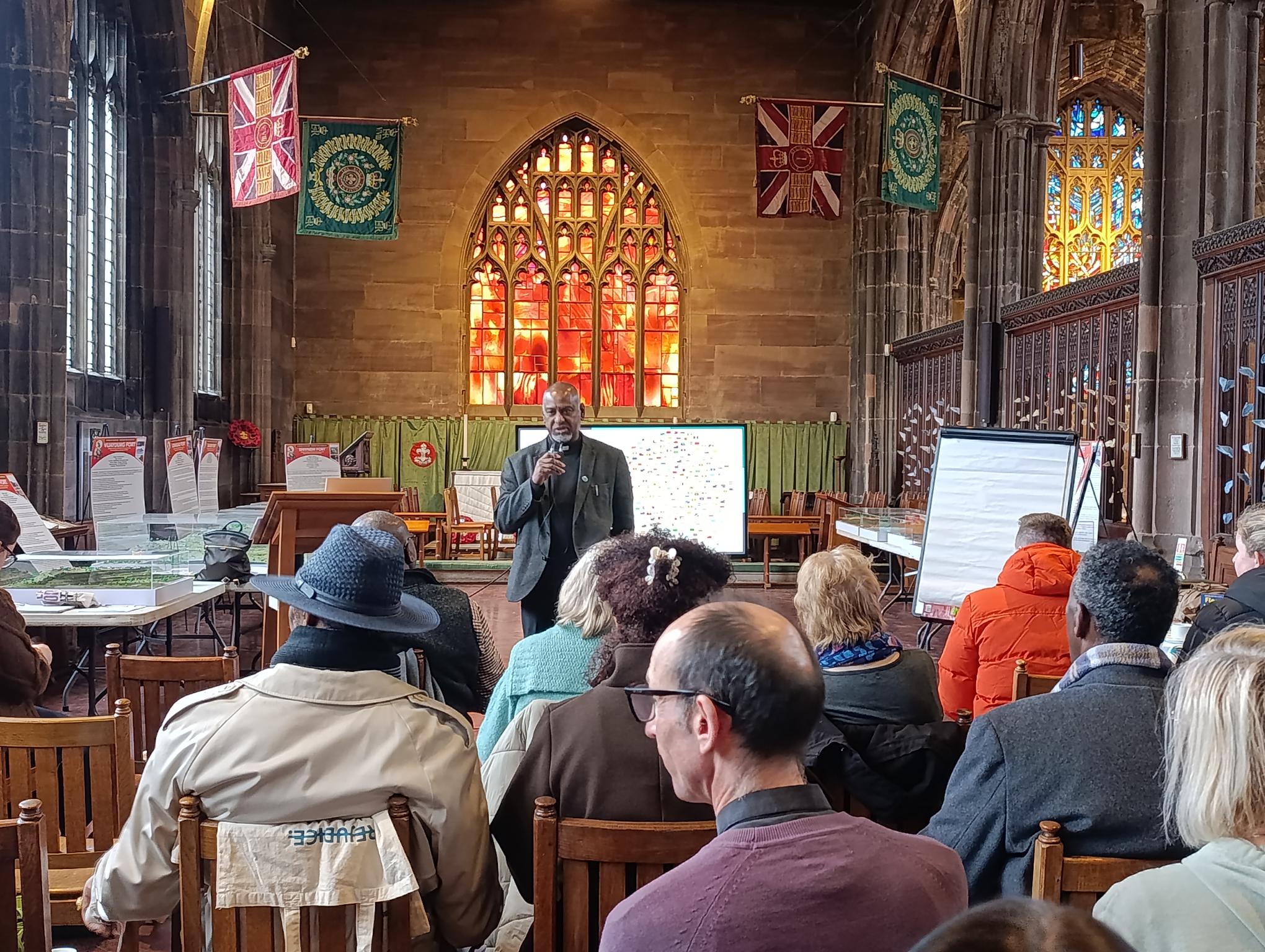
The Dean of Manchester’s Challenging Hate Forum (CHF) partnered with Manchester City Council during Hate Crime Awareness Week, a timely moment as Manchester prepared for Britain First, the far-right group demonstrations.
The first session was led by Cathy Hirst, Research and Editorial Officer, who explored the history and contemporary significance of the St George’s flag. Manchester Cathedral also welcomed Ciaron Wilkinson, Head of Partnerships and Engagement at Manchester Museum, who discussed what it means to be English and British in today’s social and political landscape.
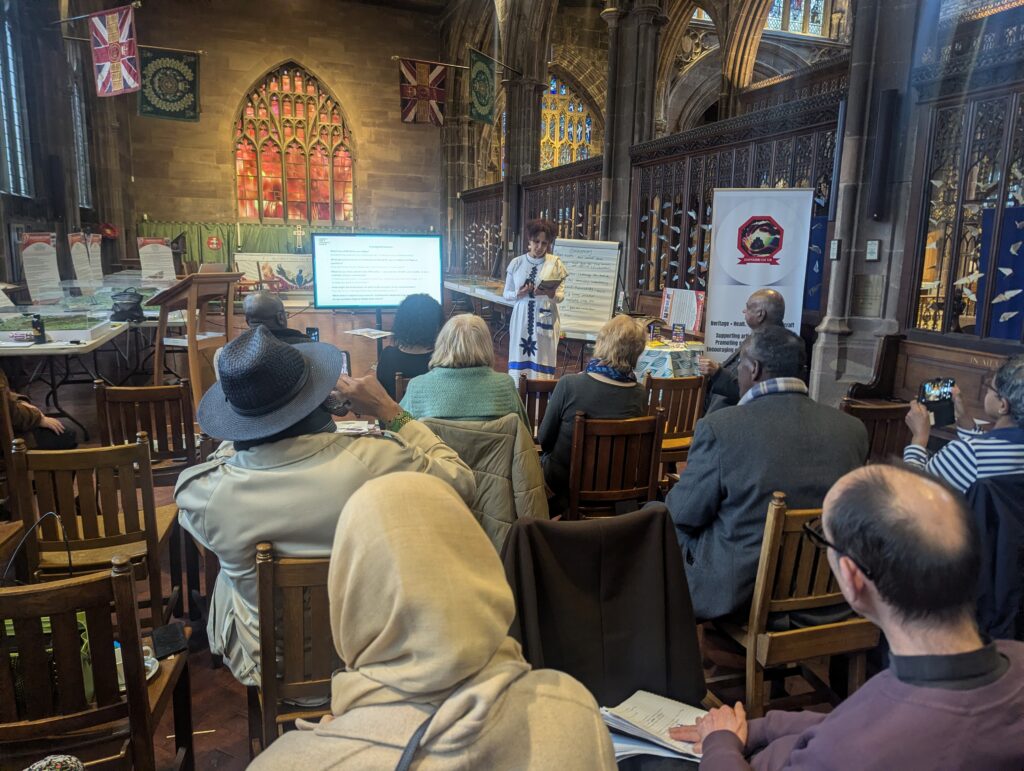
The second session investigated the complex meanings attached to national flags and how they can be misused by harmful political actors. Participants studied three poems. “Flag” by John Agard, “Union Jack” by Joseph Minden, and “Self‑Portrait with No Flag” by Safia Elhillo which inspired two reflective writing activities. Through discussion and creative exercises, attendees explored how colours and symbols of flags can be reimagined as an inclusive “act of welcome”.
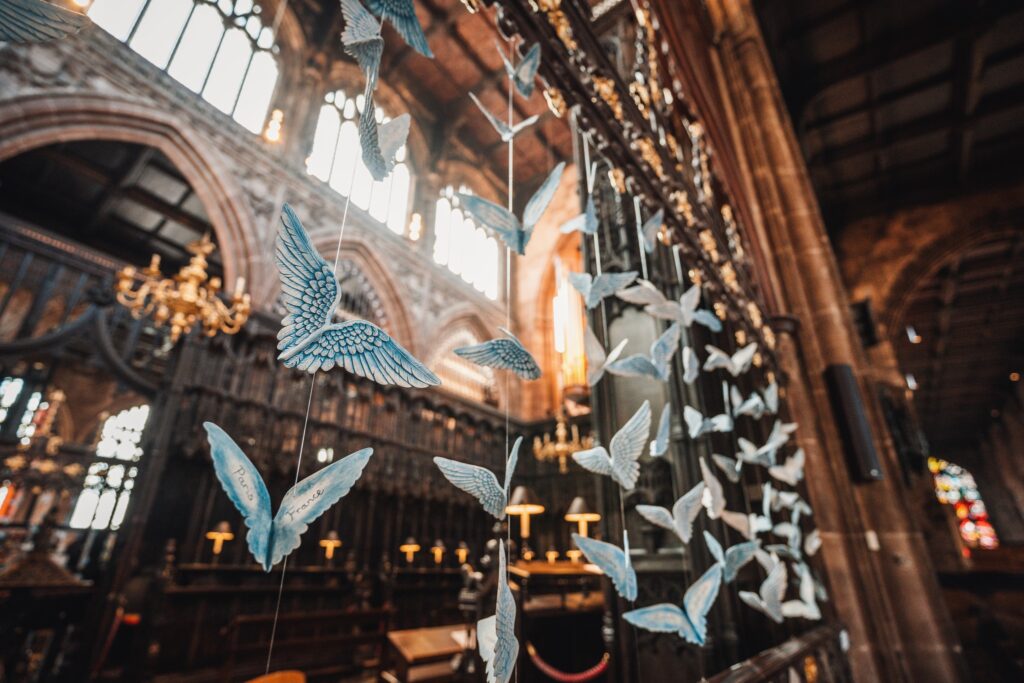
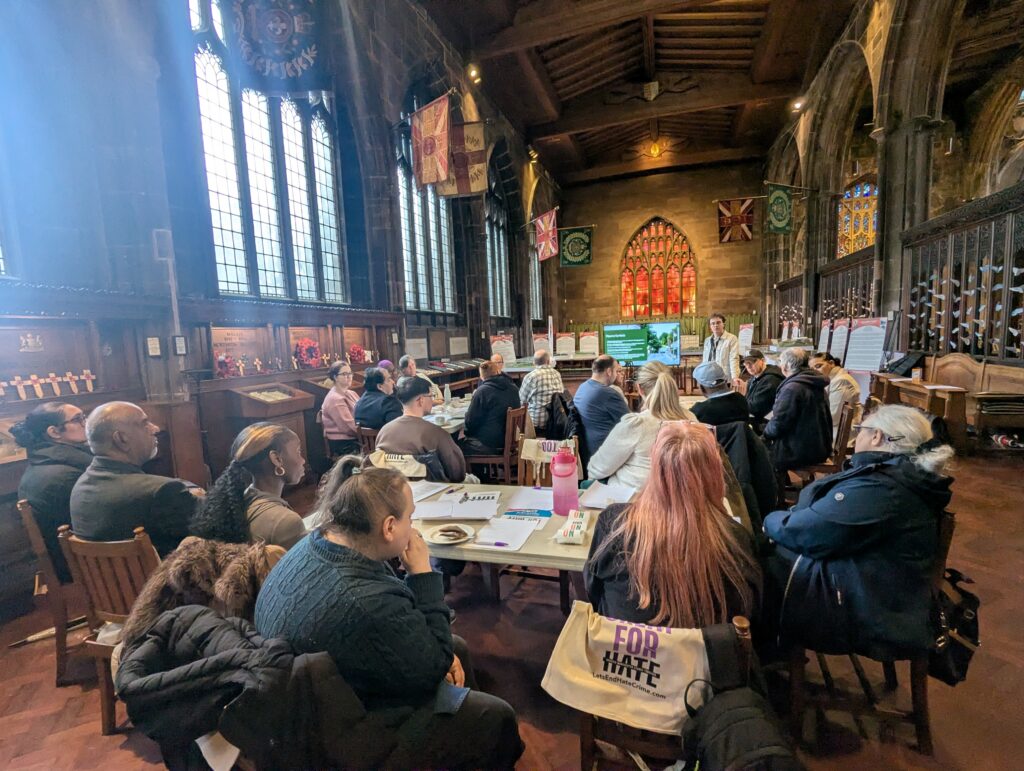
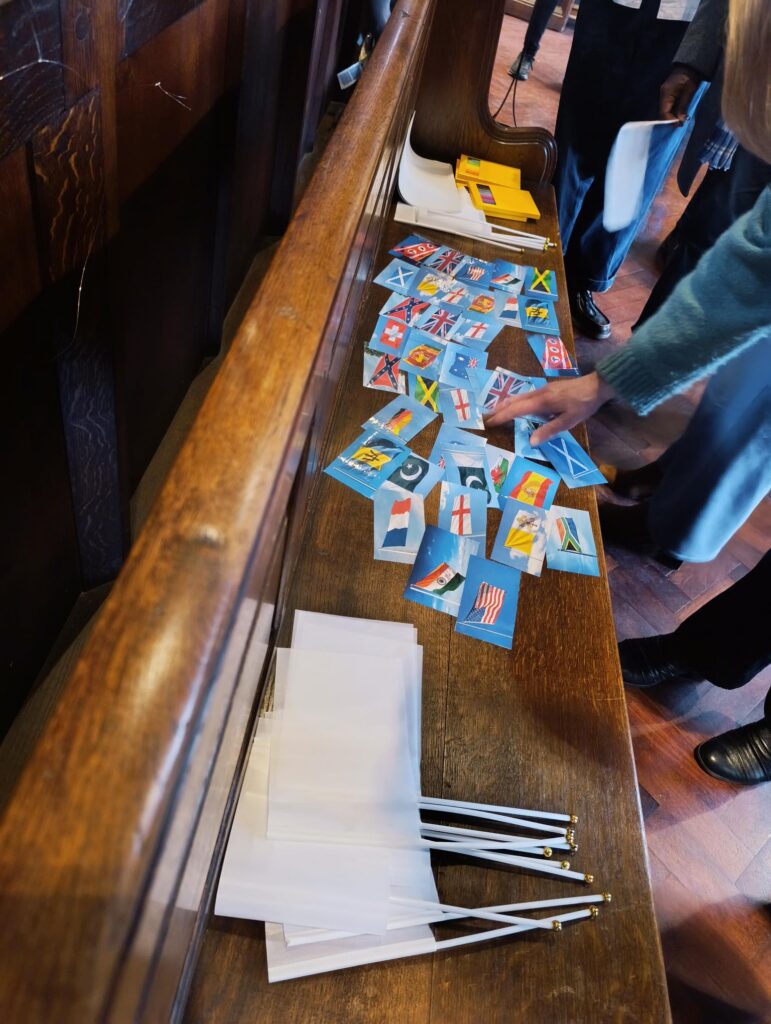
The third session explored Flags, belonging and identity led by Diane Gray-Stephenson – Racial Justice Programme Lead. The group considered the powerful emotions and histories that flags carry. To begin, each person in the group chose a flag that stirred something in them. For some, it evoked pride, joy, or a sense of belonging. For others, it awakened memories of exclusion, hurt, or anger. These honest reflections opened up a rich conversation about how our identities are shaped, affirmed, or sometimes undermined by the symbols around us.
But the heart of the session was hopeful. We asked: How can we reclaim the meaning of the flag?
How can we anchor it not in exclusion but in shared identity, mutual respect, and the richness of our diverse communities?
Participants reflected deeply on how, as people, we are called to rebuild relationships with those who may hold different cultural or religious backgrounds from our own. We explored practical ways to engage with curiosity rather than fear.
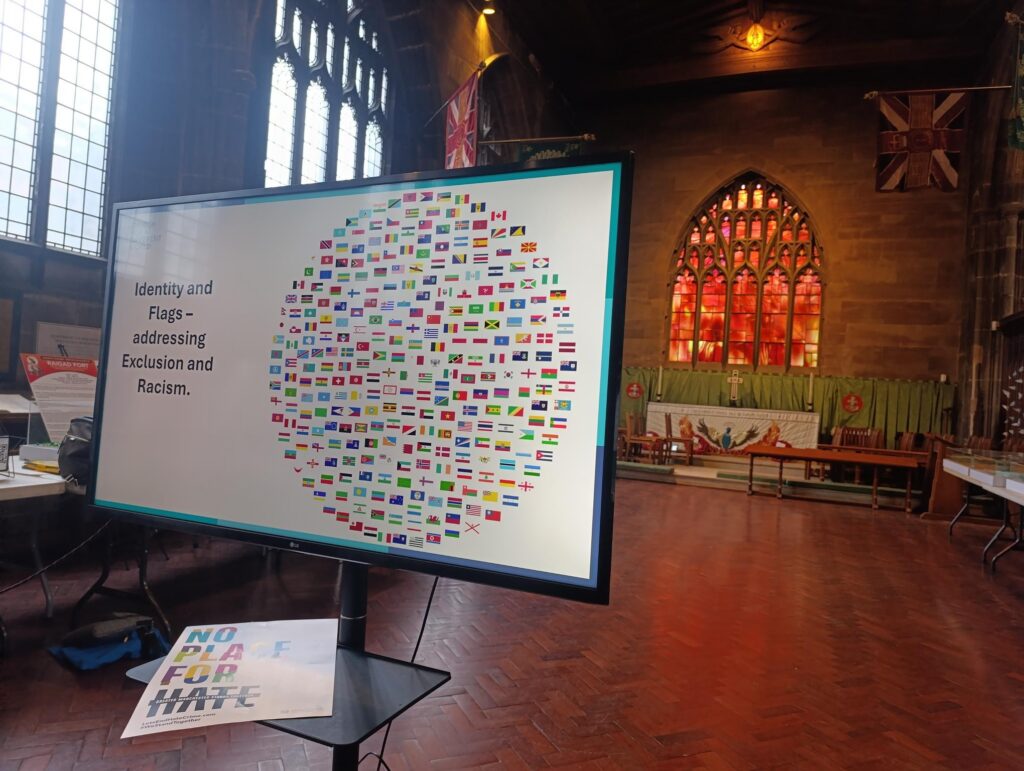
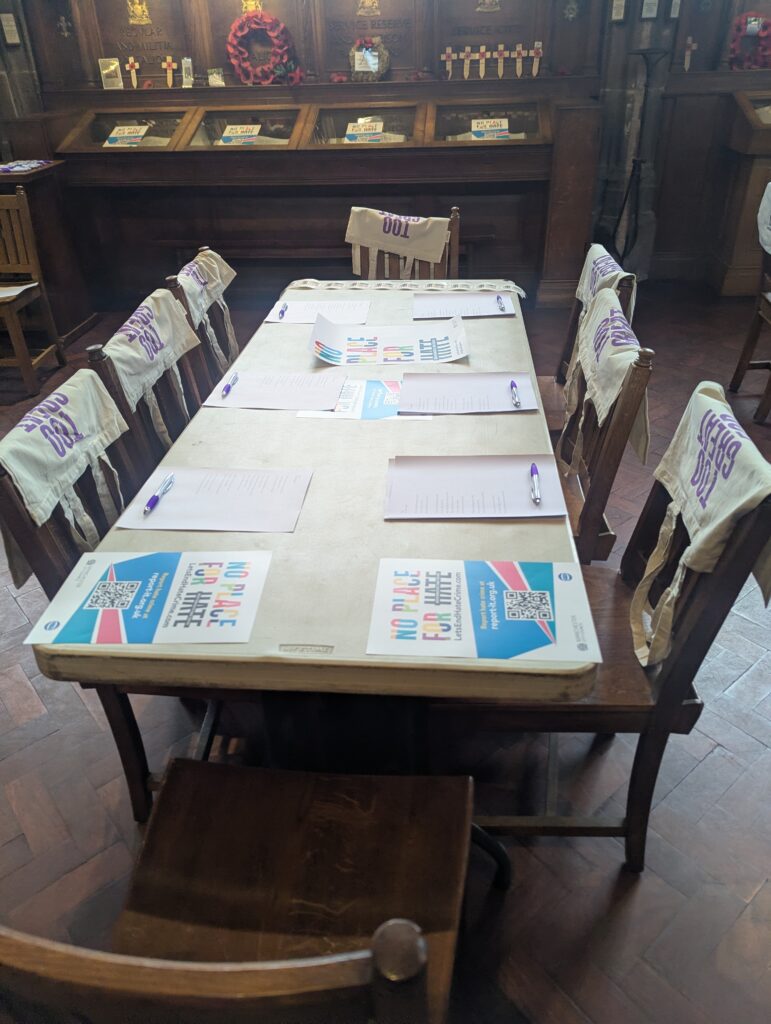
The conversation reminded us that flags, like all symbols, only gain meaning from the stories we attach to them. If we want a society where all feel welcome, valued and safe, then we have an opportunity and a responsibility to shape new narratives. Ones rooted in truth, compassion, and shared humanity.
If this is a conversation that you would find helpful in your parish, please reach out to Diane Gray-Stephenson.