Racial Justice
Resources for Children
These resources have been created by the Shades Team for use on Racial Justice Sunday, but they are suitable for any time of year. They offer an opportunity to reflect on racial justice within your church, school, or Sunday school setting.
Shades of Love
Shades of Love is a community‑wide creative project involving schools and churches. It aims to provide a meaningful way for children, young people, and adults to reflect on the Racial Justice Sunday theme of “Love Your Neighbour”, while creating art that is thoughtful and unifying.
Racial Justice Sunday began in 1995 following the tragic murder of Stephen Lawrence. Churches across the country came together to highlight the racial inequalities that took place and encourage active action against racism.
It is a day dedicated to reflection, prayer and community engagement, and this year’s theme of “Love Your Neighbour” encourages us to work towards a world where every person is valued, loved and affirmed for who they are.
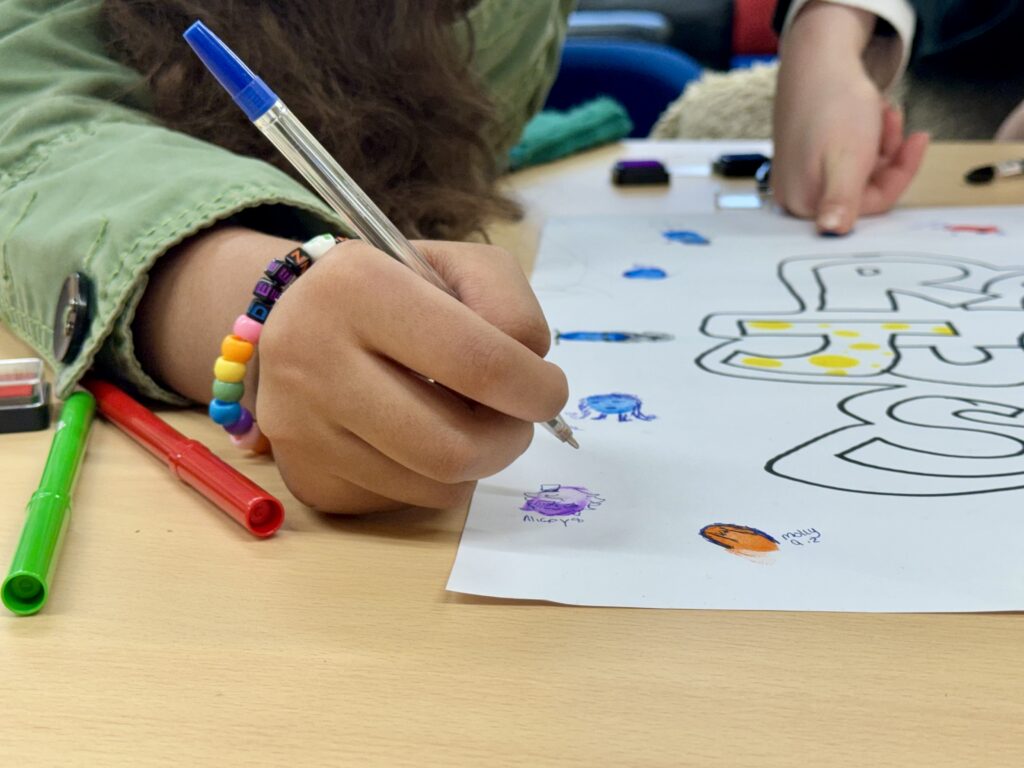
Schools and churches are invited to engage in simple, creative activities using fingerprints as a symbol of identity and unity. Fingerprints remind us that each person is unique, and that identity runs far deeper than what we see on the surface.
How to Get Involved
Step 1: Pause and Pray
A Prayer for Racial Justice Sunday
Loving God,
You created each of us in your image, unique, seen and deeply loved.
You knit us together as one family, and you call us not only to believe in love, but to live it.
On this Racial Justice Sunday, we hear your command:
“Love your neighbour as yourself.”
Teach us what this truly means, not just in words, but action, courage and compassion.
Lord Jesus,
You welcomed those who were overlooked, stood with those pushed aside.
Broke down walls that divided people, help us to do the same.
Open our eyes to injustice, soften our hearts towards one another.
Give us humility to learn, listen and grow.
Holy Spirit,
Move among us as schools, churches and communities.
Help every child, every young person, and every adult know this truth:
they belong.
Help us build spaces where everyone is valued, differences are celebrated and love is visible in every shade.
In the name of Jesus, who calls us neighbours,
AMEN.
Begin by sharing the above prayer and invite participants to reflect quietly on the following questions:
- Who is my neighbour?
- Where do I see love, and where is it needed?
- How can I help someone feel they belong?
Step 2: The Foundation
A Bible verse that underpins the racial justice work we do is Mark 12:31: The second is this, you shall love your neighbour as yourself, there is no other commandment greater than these.
We’ll explore our identity in Christ and the ways we are all part of his family, reflecting the ways he loves us unconditionally, and how His love is seen as a reflection of a love that embraces everyone equally, regardless of any differences we may have.
Step 3: Creating Together
Feel free to choose one (or more) of the creative activities below:
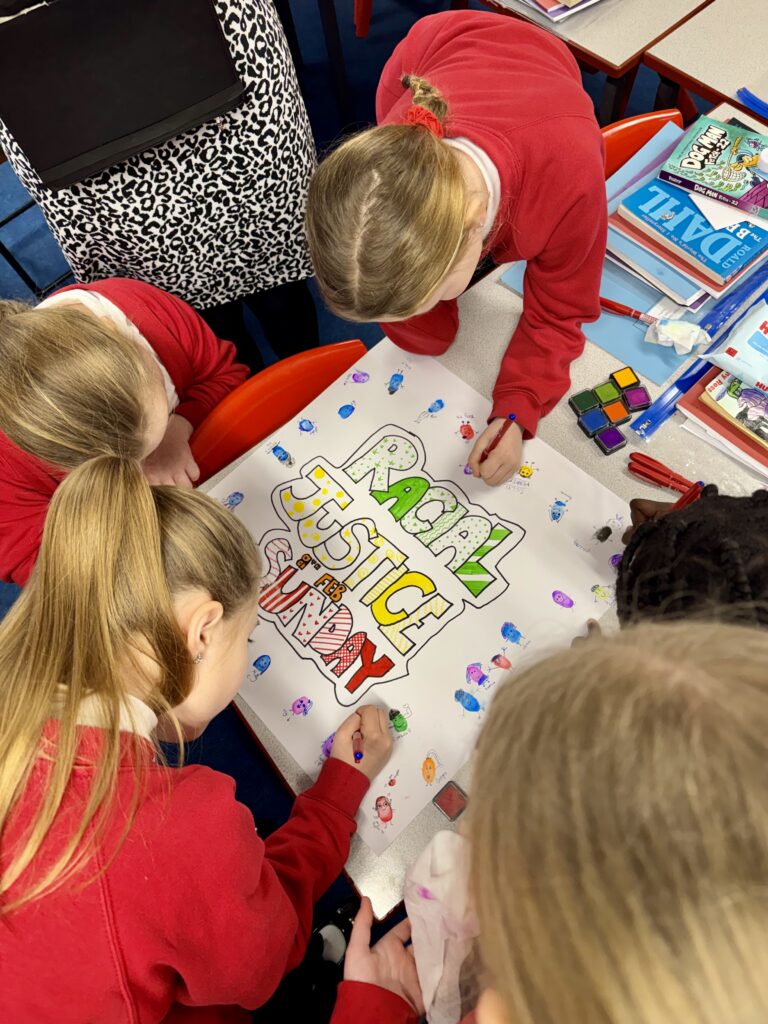
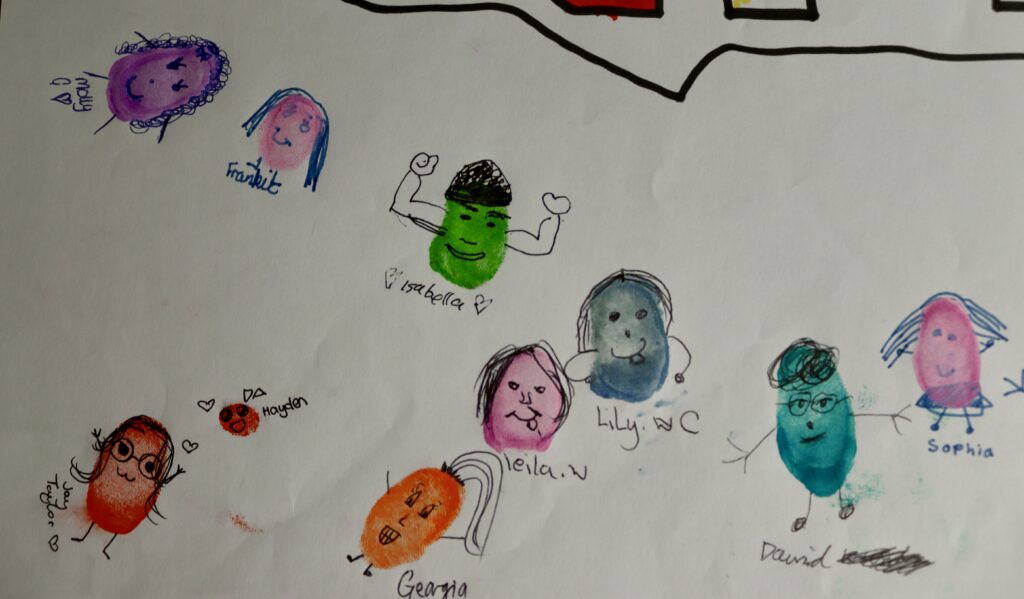
- Fingerprint self-portraits – reflecting identity, individuality and dignity.
- Reflection fingerprint artwork – Writing or drawing what love looks like in action.
- Love collaboration artwork – Each fingerprint contributes to a shared message of unity and commitment.
1. Fingerprint Self-Portraits
Participants create a fingerprint (thumbprint) self‑portrait.
This activity works particularly well for Upper KS2 and KS3, but can be adapted for any age group.
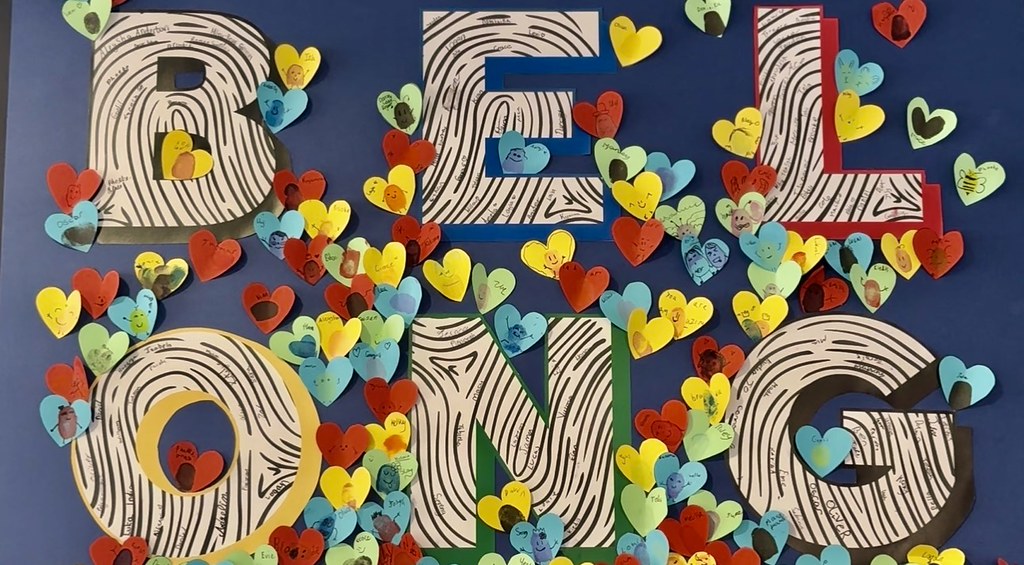
2. Reflection Fingerprint Artwork
Print a large fingerprint outline and invite participants to write within the lines, either:
- what love means to them, or
- how they can show love to their neighbour.
3. ‘LOVE’ Collaborative Artwork
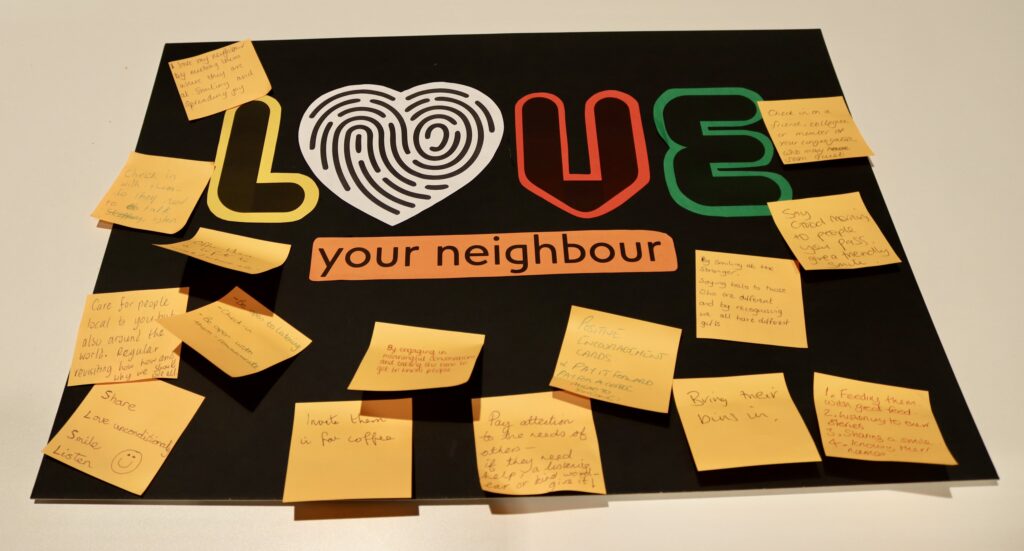
Create a large ‘LOVE’ display.
Participants add their fingerprint inside a heart shape that can replace the O or V, symbolising unity and collective commitment.
Encourage participants to see their contributions as an act of prayer and commitment. Name belonging out loud, affirming “There is room for everyone here.”
Handy Resource List
- Ink pads or paint
- Pens or markers
- Paper or card
- Scissors
- Wipes for clean‑up
Step 4: Commitment to Ongoing Action
To conclude, invite participants to commit to one act of love they will practice beyond the day; these can be written or verbally shared.
Some ideas might be:
- Speaking up when something isn’t right
- Including someone who feels left out
- Listening and learning about different experiences
- Choosing kindness, even when it may feel difficult
- Celebrating diversity and unity
- Reflecting on justice, identity and kindness
- Having open conversations with children and young people

Step 5: Share and Witness
We would love to see your creations. Display your artwork in your school, church, or shared space. Use it as a talking point, a prayerful reminder, and a public witness to love and justice.
Share your creations to our Places Project Facebook Page to inspire others and show that love is active in your community.
We don’t want to just talk about love; we want to live it. Let’s come together to make love visible in every shade.
Explore more