Bishop David Addresses Diocesan Synod
At Diocesan Synod, Bishop David shared his presidential address which underlines the importance of long-term planning, praises the ministry of our parishes, and encourages the Church to serve the wider community with courage.
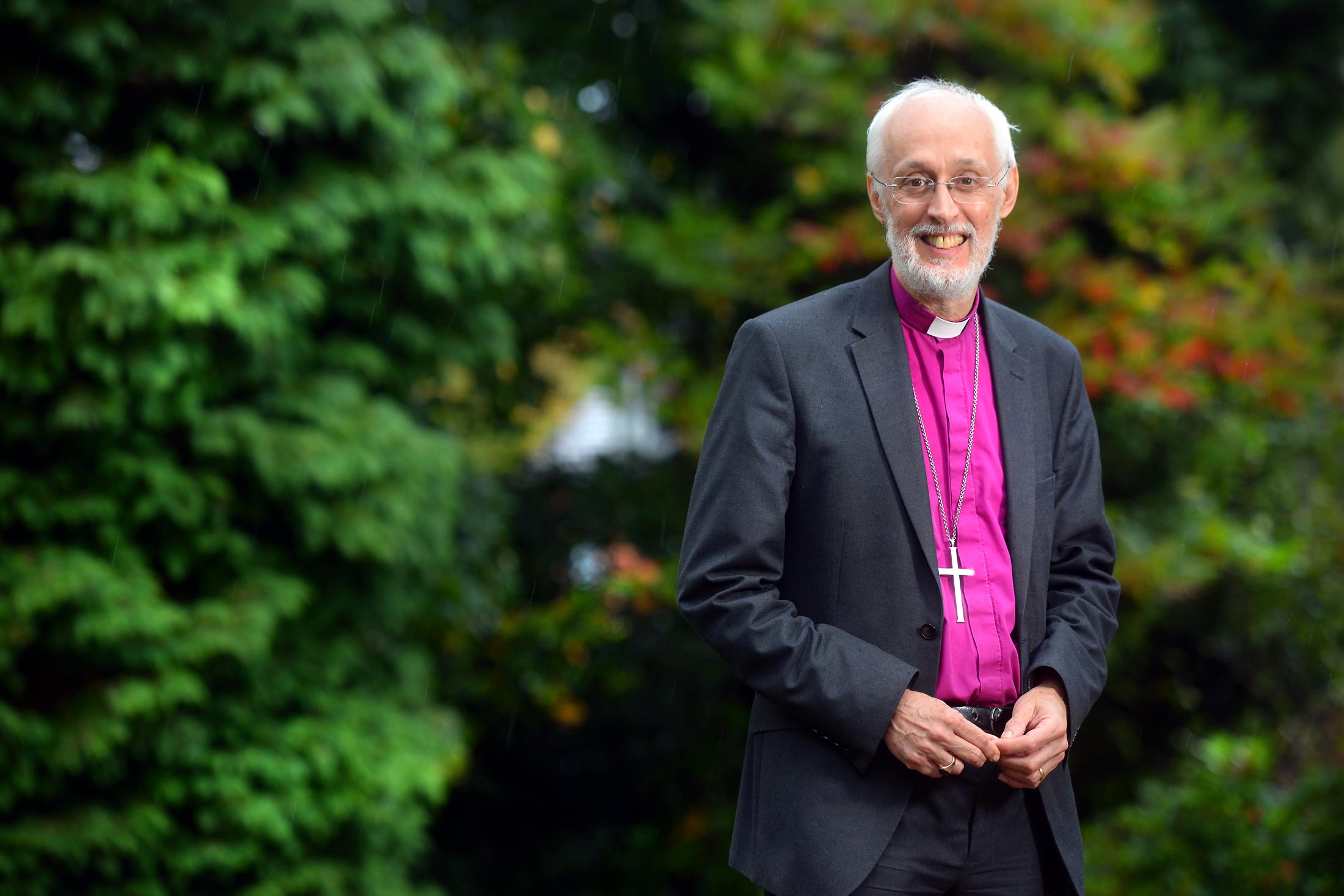
At Diocesan Synod on Saturday, 6th June , Bishop David shared this presidential address which underlines the importance of long-term planning, praises the ministry of our parishes, and encourages the Church to serve the wider community with courage:
“The great 20th century economist, John Maynard Keynes, was once taken to task over whether he had considered what would be the impact of his policies in the long run. “In the long run”, replied Keynes, “You and I are dead”. I’m largely a fan of Keynes’s barbed aphorisms, and it may well have been the right response in the particular circumstances, but as a general principle, I think it’s wrong.
“In the long run, all of us on this call will be dead. But others, subject only to the return of Christ, will inherit what we have left behind us. And the actions we are taking now have a fundamental role to play in shaping that legacy. They will determine the sort of Church and society which future generations will have to live in and which they will need to steer in a positive direction.
“Had we been meeting in person today, we would have had a conversation about our plans for developing missional leaders, lay and ordained. We can’t become the church we yearn to be, a visible worshipping and serving presence in every community, unless we have leaders with the skills and appetite to guide us there. The latest award of national funds will enable us to take things to the next level, but we’ve already been investing energy and resources in leadership over a number of years, and results are already appearing.
“Figures shared with diocesan bishops a few weeks ago showed the huge challenge of falling clergy numbers. Many serving clergy are getting close to retirement, and I know I’m part of that statistic. The numbers of men and women coming forward for ordination we need to address the drop off are challenging. The statistics we saw, adjusted for income levels and across a three year cycle, showed every diocese bar one falling short. One diocese alone was reaching 115% of it’s target. Modesty should forbid me from naming it here, but I will. It was Manchester. What’s even more exciting is that those candidates are coming from ever more diverse backgrounds. Our Antioch Network in particular needs to be singled out for praise, but our Resource Churches and many of our traditional parishes also deserve our thanks.
“But it’s not just about clergy. It’s about leaders in every aspect of our ministry and mission. It’s about growing skills and confidence to serve in a diocese that is ever increasing in its diversity.
“The expansion of our work among children and young people builds on the success of the Changing Places project in Bolton. What we have found in expanding our mission is that a good number of the lay leaders who have grown and developed in that initial pilot are now ready to take on positions of greater responsibility. At the same time new youth and children’s workers of Christian faith want to join us. The recruitment challenges I feared we might face, and that some other dioceses have struggled with, have not emerged.
“All of this is down to our having ignored Keynes’s maxim, and deliberately taken the long view. We’ve built the pipelines of skills and talent that should serve us well for years to come.
“The original papers for today contained a report about our Safeguarding work. Here again, over time, we’ve built up both a central team of professional workers and an army of committed lay volunteers in our parishes. Careful work, nurturing relationships with our partners in policing, probation, the survivor sector and local authorities means that our operations are overseen and scrutinised by our gifted Diocesan Safeguarding Advisory Panel. We will be tested by the external audit in May next year, but I have every confidence we will pass that test.
“And when we come, towards the end of our meeting, and focus briefly on the vacancy in see work, I hope the value of my having given very early notice of my retirement, will facilitate a smooth, unhurried, and timely process towards finding the next diocesan bishop to serve here. Again, it’s all about keeping the future firmly in focus.
“But enough about our internal priorities and processes. My illustrious predecessor, William Temple, who served in the role I now occupy a century ago, famously remarked that the Christian Church is the only institution on Earth that exists primarily for the benefit of those who are not its members. It was a very Anglican thing to say. Unlike many denominations, the Anglican Communion doesn’t have a confessional statement, instead we have Five Marks of Mission.
“The church we need to become must be one equipped for the challenges set by the society that Britain, and England more particularly, is becoming. And here there are matters that should gravely concern us. Matters where we may need to plough a more countercultural furrow.
“The rise in attacks motivated by hatred, that have seen synagogues and mosques targeted in our own diocese, and Jews murdered in cold blood as they went to worship, cannot be shrugged off as isolated and untypical incidents. They are products of an increasingly angry society, whipped up by social media, as we’ve seen even over these last few days. Their bile and hatred are often funded from a combination of hostile states and the profits made by those we have made billionaires through our own buying habits.
“Beyond these shores, we see churches that have been entirely co-opted by the authoritarian rulers of their nations, reduced to blessing the latest outrages, either through wilful blindness or for fear of losing their own power and status. Yet we also see churches bravely standing up to the oppressors, refusing to abandon or water down their faith, or to modify it in order to toe the line, some of them even to the point of martyrdom. Through my work with USPG it has been my privilege to spend time this year with several archbishops whose personal courage, as well as the courage of their churches, astounds and humbles me.
“Our society is not at crisis point yet, but we could be as little as one General Election away from a collapse in the values that distinguish a liberal democracy from what the former leader of Hungary described as an “illiberal” one; a place where the executive power of the leader is used to dismantle the checks and balances set up to prevent autocracy. We need to be a church that both seeks to bring reconciliation now, and also one prepared to be faithful to its calling should we face either direct hostility or a determination to pervert our faith by those who pretend that their political ambitions are an expression of Christianity.
“I’m a person of hope. I still believe we can resist evil and promote good, both in the church and in society. But the challenges are huge, and the needed to be prepared for the future is paramount.”