Historic Salford Church Embraces Solar Power
St John the Evangelist Church, Pendlebury, a Grade II-listed Silver Eco Church in Salford, has taken another step on its sustainability journey with the installation of solar panels and battery storage earlier this year.
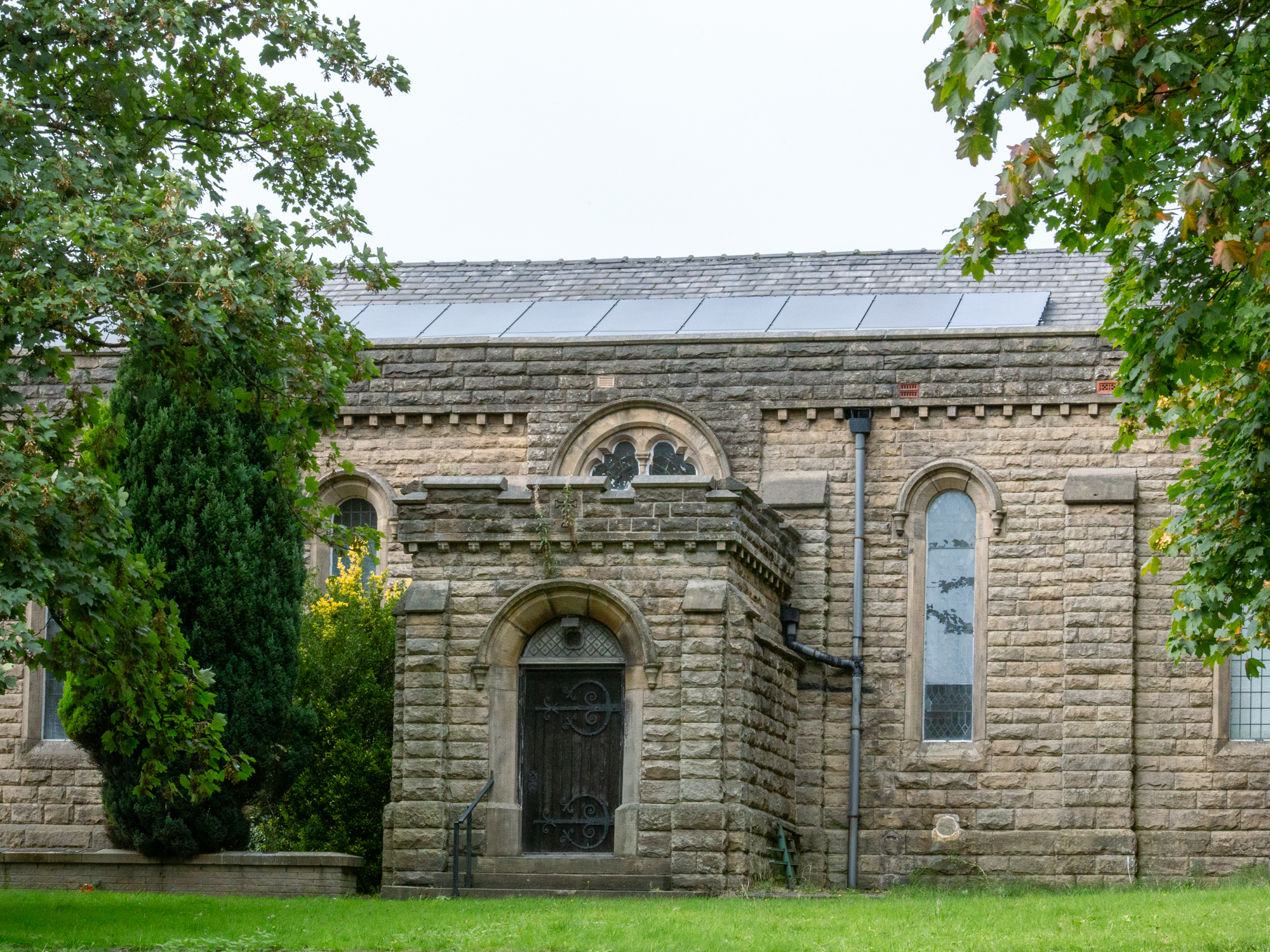
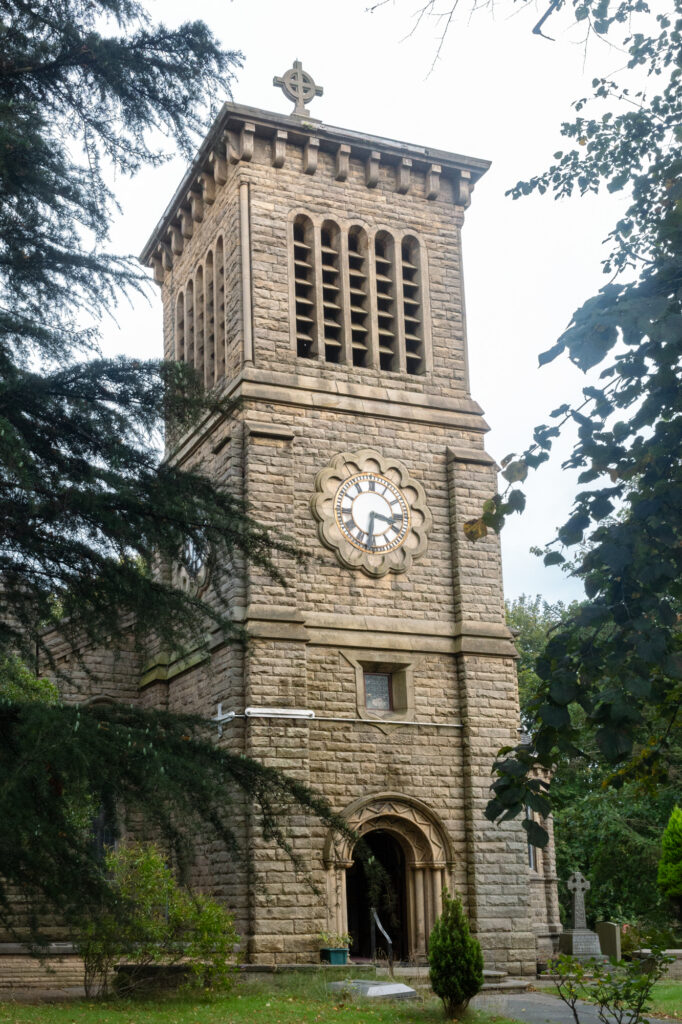
St John the Evangelist Church, Pendlebury, a Grade II-listed Silver Eco Church in Salford, has taken another step on its sustainability journey with the installation of solar panels and battery storage earlier this year. Built in the Romanesque style in 1842, the church is combining historic heritage with modern technology to help the environment and keep energy bills down.
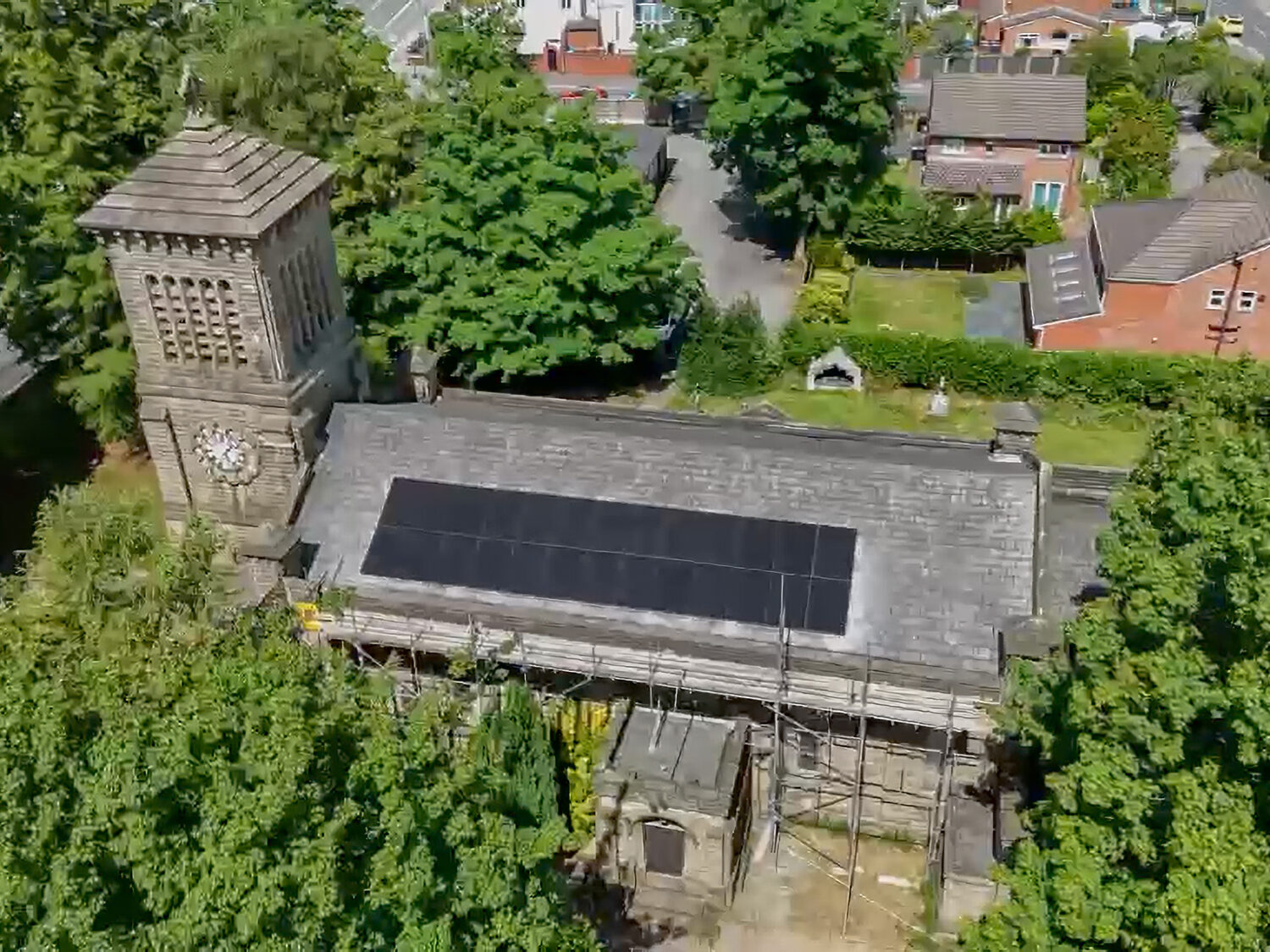
The newly installed system consists of 26 solar panels alongside two batteries which provide storage capacity. The impact has already been considerable, with electricity bills reduced by more than 50%. This follows the replacement of the church’s ageing gas-fired wall heaters in February 2025, as they were becoming increasingly expensive to operate. These have been replaced with an all-electric heating system, including low-level electric radiators and high-level infrared heaters. The new solar installation will further help to keep running costs down, and the church is arranging to export surplus energy back to the National Grid.
To support other churches considering similar projects, the parish has documented its experience in the project diary below, which details every stage of the process, including practical advice on what worked well and what challenges were faced. The team is also happy to share their experience, offer guidance, or arrange visits for others interested in exploring renewable energy solutions.
Much of the project was funded through grants and donations, helping to make the installation financially viable. Further information about funding, planning, and implementation can be found below.
If you would like to find out more about the project, please contact Clive Morris, Eco ALM at St John’s, Pendlebury: m100cjm@yahoo.co.uk
Project Diary – Our Eco Church Journey
By Clive Morris, ALM for Ecology and Creation
Introduction
St John the Evangelist, Pendlebury, is a Grade II-listed church built in 1842. In 2020, we were awarded a Silver Eco Church Award by A Rocha UK for our work in Ecology and Creation.
This guide shares our experience of replacing our heating system and installing solar panels as part of our journey towards becoming a Gold Eco Church. We hope it helps other churches considering similar projects by highlighting both the opportunities and the challenges.
Tip 1: Ensure your PCC and clergy are fully committed to the eco journey. Projects of this scale require support across the whole church.
Replacing the Heating System
By early 2024, our ageing gas-fired wall heaters had become financially unsustainable. During the winter months, gas bills were reaching around £2,500 per month, while servicing and repairs cost almost £1,000 annually.
The PCC explored several options:
– Electric boiler system
– Ground-source heat pumps
– Air-source heat pumps
– Electric radiators with infrared heating
After careful consideration, we chose a combination of electric radiators and high-level infrared heaters. This offered the best balance of efficiency, practicality and minimal disruption to the building. At the same time, we decided to pursue solar power to support the move towards net zero.
Faculty approval was required and granted. Planning permission was not needed for the heating project.
Funding the Project
The work was made possible through a combination of:
– A generous donation from a member of the congregation
– Grants from the Diocese of Manchester
– The Garfield Weston Foundation
– The Benefact Trust
Tip 2: Check whether your church is listed. Listed buildings often require additional surveys, permissions and professional fees.
Tip 3: Carefully assess all available options before deciding on a solution. This evidence will be important for faculty and planning applications.
Tip 4: The cheapest option is not always the most cost-effective in the long term.
Tip 5: Involve the diocese at an early stage.
Tip 6: Explore funding opportunities early through Church of England, diocesan and charitable grant schemes.
Installation and Results
The new heating system was installed in February 2025, almost a year after the initial discussions began.
The system includes:
– Eight electric radiators providing background heat and controlled remotely via a smartphone app.
– Nine high-level infrared heaters that warm people directly and can be switched on when needed.
The result was a 100% reduction in gas consumption, with all electricity sourced from renewable energy suppliers.
Installing Solar Panels
The solar project proved considerably more complex than the heating replacement.
Because St John’s is a Grade II-listed building, both faculty and planning permission were required, alongside a structural survey of the roof.
A first planning application was refused on heritage grounds. An appeal to the Planning Inspectorate was eventually successful, but additional planning submissions and conditions created further delays and costs.
After more than two years of work and multiple planning applications, full planning permission was finally granted in July 2026.
The system now consists of:
– 26 solar panels generating 11kW
– Two batteries providing 9kW of storage
The panels meet most of the church’s electricity needs, with surplus energy exported back to the grid.
Tip 7: If your church is listed, budget for professional planning and consultancy fees.
Tip 8: Be clear about the services consultants and architects will provide, and understand how much work will still fall to the church.
Project Costs (£)
Heating System
16,478
Solar Installation
13,840
Planning Consultancy
9,983
Structural Survey
750
Planning Fees
766
Stonework Repairs
1,008
Fire Risk Assessment
360
Battery Cupboard
560
Export Meter Works
500
Total Cost: 43,958
Grants and donations totalled £35,760, meaning the church contributed the remaining balance.
Although professional fees added significantly to the project’s cost, the reduction in energy bills is expected to provide long-term financial benefits. Prior to the heating upgrade, winter gas costs were around £2,500 per month. These have now fallen to approximately £1,200 per month, even before taking the full benefit of the solar installation into account.
Looking Ahead
Our experience shows that sustainability projects require patience, planning and perseverance, particularly for listed churches. While the process was often challenging, the outcome has been worthwhile, providing both environmental and financial benefits for the future.
Tip 9: Pray about every stage of the journey and keep God at the centre of what you are seeking to achieve.
We have now submitted our application for a Gold Eco Church Award.