
Title – Miss
Parish – St Peter’s Westleigh
Year of Birth – 1998
Have you previously served as a member of the General Synod? – No
A vacancy has arisen in the House of Laity of General Synod. There are six nominees from our diocese, and whoever is elected will serve on the General Synod for the remainder of the current term (2021–2026).
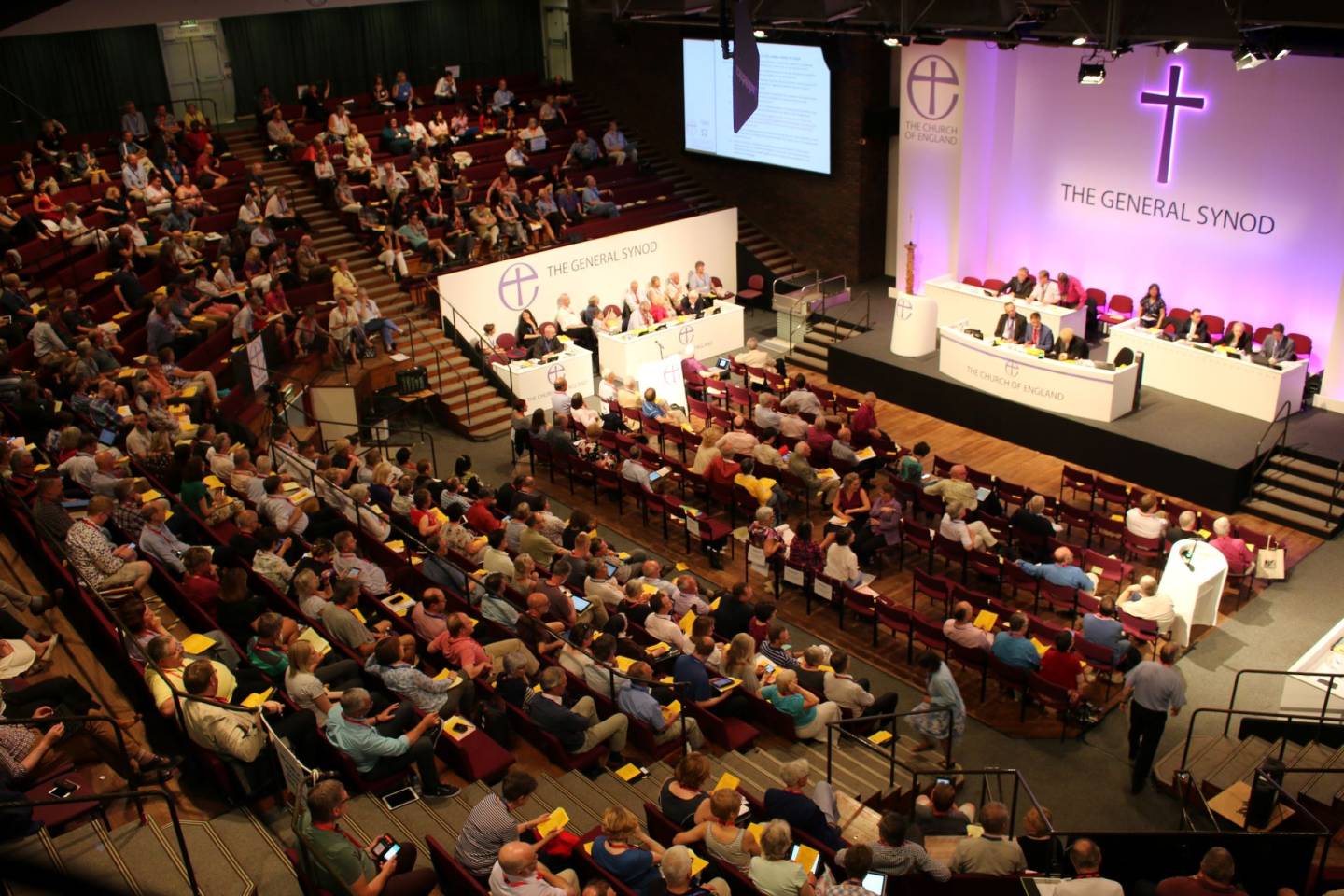
A vacancy has arisen in the House of Laity of General Synod, offering a unique opportunity to represent the concerns of our communities and the Diocese of Manchester at a national level.
Serving on General Synod provides a voice in shaping national legislation that affects every part of the Church of England. It also provides a platform to raise important issues and contribute to debates on social, theological, and policy matters.
There are six nominees from our diocese. Whoever is elected will serve on the General Synod for the remainder of the current term (2021–2026).
Only Lay Deanery Synod members are eligible to vote, and they should have received an email from the College of Electors with further details.
The ballot closes on Wednesday, 12th November, and the election count will take place on Thursday, 13th November.
Title – Miss
Parish – St Peter’s Westleigh
Year of Birth – 1998
Have you previously served as a member of the General Synod? – No
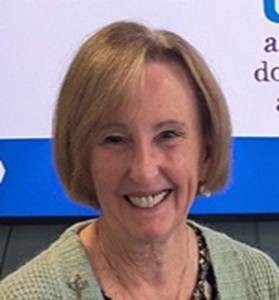
Title – Mrs
Parish – St. Paul’s Monton Eccles
Year of Birth – 1948
Have you previously served as a member of the General Synod? – No
When I received the email about the elections for General Synod my immediate reaction was ‘Why has this come to me?’ It stayed at the back of my mind for some time, refusing to go away and prompting me to consider what I might be able to offer, what I could bring to Synod as a representative from Manchester Diocese, and what God was asking me to do. I am a great believer that age is completely immaterial when it comes to serving God and answering His calling. We all need to be prepared to move out of our comfort zone and also think outside the box whatever our age. So here we are.
I am not a northerner. I was born in Hertfordshire and grew up attending church regularly ever since I can remember. I loved Sunday school, especially the picture of Jesus with the little children sitting at his feet. I sang in the choir with my parents from about 7 years old and was the youngest member of the Esperanto choir in London at one time.
My association with the north began whilst studying to become a teacher and through working in that profession for over 30 years, latterly at a High School on the edge of Merseyside. As well as being a Head of Department I was in charge of Intervention Strategies for some time. I have an MA in education and a counselling qualification. Although I don’t have a qualification in teaching Religious Education I was asked to teach GCSE RE as ‘I attended church’. It was lower sets and quite a challenge.
I am married with three children and two grandchildren and have lived in Manchester for 35 years. We attend our local church where my husband is Churchwarden. I am on the PCC, a Deanery representative and have been Parish Safeguarding Officer for about 16 years. I am part of the Diocesan PSO network group. I have taught Young People’s church, mostly young teens, been part of various church experiences for local schools and help lead our services on a regular basis, as well as being a school governor at a local C of E Primary school with responsibility for SEND. I was honoured to receive the Maundy money from His Majesty the King at Durham Cathedral this year.
At present I am the York Provincial President for Mothers’ Union (MU) and was commissioned at York Minster by Archbishop Stephen in July. This has given me the opportunity to travel throughout the province, meet many clergy and congregations and learn about the different dioceses, so diverse in need, area and challenge. I am heavily involved in safeguarding. Before this I was Diocesan Present in Manchester Diocese for 6 years, previously having been on the Trustee Board looking after all our outreach programmes and activities and facilitating parent groups.
I have particular interest and experience in practical support and courses in prisons through the chaplains, Partners of Prisoners (POPS), governors and also organisations who support the families. More recently raising awareness of Domestic Abuse in churches, the community and support for refuges has become a priority for me, apart from other areas where help is needed for the less fortunate and marginalised, such as the organisation of breaks and holidays. I chair the MU steering groups for Prisons and Modern Slavery.
I feel my faith in God and the power of prayer, as well as my life experiences keep me grounded when it comes to understanding and being there for my church family whoever and wherever they are in the world. It’s vitally important that we are prepared to move with the times, recognising the needs and cries of today’s society and embracing the necessary need for change in order to help more people come to faith and know God. We need to listen with empathy, be prepared to see things from the other person’s perspective and act in the way God asks us to do.
As a representative for Manchester Diocese I would strive to bring all this to General Synod, trusting in God to lead the way at all times.
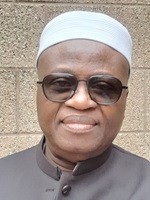
Title – Mr
Parish – St Cross Church with St Paul, Clayton, Manchester
Year of Birth – 1957
Have you previously served as a member of the General Synod? – No
I was born into a devout Christian family in Nigeria. My father was the head of our church organisation, which followed an evangelical tradition with liturgy rooted in the Book of Common Prayer (BCP). As a result, I grew up deeply familiar and comfortable with both ‘low church’ and ‘high church’ expressions of worship.
From an early age, my Christian formation emphasised the importance of being useful to the universal Church and serving as a faithful instrument of God within our local communities. This understanding of discipleship – centred on service and Kingdom growth – has shaped my life and ministry.
I now live in Manchester and am blessed with two grown-up children and four grandchildren. I am of Yoruba heritage and was raised and educated in Nigeria. My professional background spans many years in Sales Management and Marketing.
Currently, I serve as the Intercultural Mission Enabler for the Diocese of Manchester, working closely with parish churches to explore and embrace the growth opportunities arising from the increasing diversity within our communities. I am also a Reader at St Cross Church, Clayton, and an Honorary Lay Canon at Manchester Cathedral.
I have a deep love for all of God’s creation – people and animals alike – and enjoy keeping chickens and rabbits as pets.
If selected to serve in the House of Laity in the General Synod, I believe my life experiences, both within and beyond the Church, have equipped me with valuable insights and perspectives. I hope to contribute meaningfully to the ongoing conversations within the Anglican Communion, helping to shape a future that reflects the richness of our shared faith and diversity
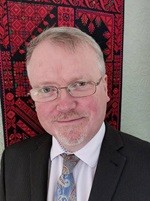
Title – Mr
Parish – Oldham Parish Church
Year of Birth – 1968
Have you previously served as a member of the General Synod? – No
Why I am standing for General Synod
Background
Observations on parish/Diocesan life
Proposed by Hilary Thomas (Salford & Leigh Deanery) and seconded by Paul Tyler (Oldham & Ashton Deanery) in this election. I have known Hilary for over 15 years and Paul since moving to Oldham in 2023.
Abby Ogier, Manchester laity representative on General Synod supports my candidacy, kindly writing:
‘John would be an excellent candidate to complete the representation of the laity of Manchester on General Synod. He has been involved in many aspects of parish life, including time serving as a churchwarden. He brings considerable skill and knowledge from his working life and the voluntary work he has done beyond the C of E. I encourage you to give John your first preference vote’.
Thank you for taking the time to read.
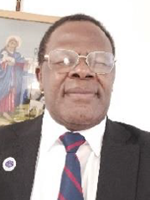
Title – Mr
Parish – Salford Sacred Trinity
Year of Birth – 1963
Have you previously served as a member of the General Synod? – No
About me
I am an elected Diocesan Synod member, currently serving on the Mission and Pastoral committee.
Gifted and trained in MA Contextual Theology (Church Governance and Management), I am sensing a vocation to further serve on the General Synod. Hence, I am asking you to vote for me, so that holding in love together, we can continue to participate in God’s contextual missions and evangelisms, in our theologically varied parishes and communities.
Church Life and Community Work
Since encountering Jesus as a 23-year-old HR professional, on the eve of my first miraculously successful management job interview, my missionary journey took me first to Bible Society of Malawi, researching and translating scriptures for audio/radio and TV programmes. After listening to the dramatized scriptures, audiences would raise challenging thematic questions. Identifying my knowledge gap, I was obliged to come to the UK and pursued relevant theological studies, first at a Jesuit Catholic Heythrop College/University of London, graduating with an honours Bachelor of Divinity (Church Doctrine and Christian Ethics of pandemics and incurabilities; euthanasia and mercy killing; sex and sexualities; birth rights and abortion; just war; natural disasters and climate change; law and morality). Secondly, I decided to balance up my theologies by enrolling at a liberal college, Luther King House/Manchester University, obtaining an MA in Contextual Theology (Queering Governance and Management).
In the past 20 years of my vocational missionary work across Ardwick, Salford, and Bolton deaneries, I have served in various parishes of varied theological persuasions. As well as being Churchwarden and Deanery Representative at St Clement’s Openshaw, I was a Nightshelter Coordinator working in liaison with Boaz Trust, helping the most vulnerable homeless. This involved leading a team of volunteers who would prepare beds in church and providing food, transport, shower and clothes, within acceptable safeguarding policies and practices. Ecumenically, I assisted in Bible studies, masses and evangelism activities at Gorton St James, Emanuel Church, St Philip’s parishes, and St Anne Catholic Church. I moved to Salford and worked with St Paul’s and Ascension Parishes as Mission Action Plan Coordinator, Deanery Representative, Eucharistic Minister/Altar Server. I won the Bishop’s ‘Church For A Different World’ Award, for community project in ‘Creative English Classes’, which was supported by Manchester Metropolitan University and Ministry of Housing. I also worked and served at St Chrysostom Vitoria Park as Parish Assistant and Missional Community/Deanery Representative.
As a contextual theologian, I have the skills and knowledge to adapt to various liturgies and ways of worshiping to meet specific parish needs. Since 2014, I have been a member of the Walsingham Shrine and have served on pilgrimages with St Peter’s Swinton and St Augustine Tonge Moor. I am also an associate member of the Iona Community, following this year’s Bishop led pilgrimage organised by Manchester Diocese. On the other hand, I have been on placement at St Philip’s resource church in Salford, helping during Alpha Courses. I currently help at Place of Welcome, Taizé and Open Table Services, and ensuring that Salford Sacred Trinity Church is eco-friendly.
Ecumenically, I work with Medaille Trust, a Catholic charity tackling modern slavery in conjunction with Home Office and police. Outside church, I am on the Management Committee and Host “Talk About It Mate,” an award-winning men’s mental health charity in Salford. Working in liaison with an Immigration Barrister, I am Host Coordinator/Facilitator at Manchester Migrant Solidarity (MiSol), giving appropriate professional help and pastoral support.
My Representative Priorities
Rooted and experienced social justice and managing change processes, I will in love continue to prophetically speak truth to unjust structures and practices that thwart missions and evangelism, if elected to General Synod. There are many examples in the Bible where the Counsellor Holy Spirit of Truth (John 16:13) brought participative and progressive ecclesial changes, such as: transforming the exclusive and patriarchal Jewish Early Church into a fairer gentile inclusive Body of Christ; Challenging the inequalities of food and resource distribution by reforming governing structured with the appointment of deacons(Acts 6:1-7); Promoting inclusive missions and ministries without regard to ethnicity and cultural circumcision, gender, sex, heteronormality, sexuality, mental and physical disability since “There is neither Jew nor Greek, there is neither slave nor free, there is no male and female, for we are all one in Christ Jesus” (Gal 3:28). Likewise, if you elect me, I will offer unconditional positive regard and empathy, when debating and voting, with active listening, so that together we can bring much needed positive change that will enhance God’s mission and evangelism. God himself has always initiated dialogues between differing parties, by a call to reasoning together (Isaih 1: 18). Most of the issues facing the Church of England today can progress with a prayerful attitude of St Francis of Assiss: “Make me an instrument of your peace; where there is hatred, let me bring your love. Where there is injury, your pardon Lord. Where there is doubt, true faith in you. O Divine Master, grant that I may not so much seek to be consoled, as to console; to be understood, as to understand; to be loved, as to love with all my heart.”
I thank you for reading my address. I would be very grateful for your vote.
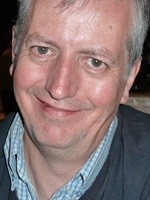
Title – Mr
Parish – Rusholme, Holy Trinity
Year of Birth – 1957
Have you previously served as a member of the General Synod? – No
It is an honour to be one of the candidates for General Synod following the sad death of Geoffrey Tattersall KC, whose distinguished service of the Synod and of this diocese is missed by many.
I have been a church warden for a small church in London Diocese, and a larger church in the Diocese of Manchester where I also serve on Bishop’s Council, Diocesan Synod and as a PCC member. We brought up our family in Manchester where we have lived for more than thirty years. I currently, with others, run a monthly meeting at my church for people with learning disabilities from across Greater Manchester, and chair the committee of a local charity serving the thousands of international students who study here. I am trained as a church musician and theologian and have used these gifts throughout my professional career as an award-winning producer of church services and other religious radio programmes for BBC Radio 2, 3 and 4. As a result I enjoy the widest possible range of contacts with different denominations and traditions throughout the UK, and especially within the Church of England.
Following the appointment of the Bishop of London Dame Sarah Mullally as Archbishop of Canterbury hopes of various groups will doubtless have been raised regarding LLF discussions, towards the achievement of a settlement in line with their views. In a deeply divided church ways forward must be found which accommodate the differences amongst us. It seems to me a vitally important part of the witness of the national church to the nation that an accommodation is both sought and achieved which respects polarised but sincerely held views, which leaves all parties feeling they have a future in the Church of England, and which gives a model for future debates across the wider international Anglican communion. To quote the Bishop of Chelmsford Guli Francis-Dehqani, we need to “learn to love one another across a whole range of differences” – some of which may not yet have been dreamt of by anyone!
Anglicanism at its best rejoices in difference, but it is both our greatest strength and weakness. The comparatively recent reorganisation of our diocese into fewer deaneries seems to have received a mixed reception. I believe that organisational streamlining should – if people are prepared to work together across what may have been past boundary lines – enable future mission and ministry. I am certainly supportive of our diocese embracing the opportunities of its recent SDF bids to the Church Commissioners and believe that renewal of the depth needed across our diocese needs not only to be nurtured in every parish but also managed, as there is a frightening proportion of parishes in imminent danger of becoming unviable. Those parishes which are sadly no longer able to continue are often in our poorest communities. They need to find renewal, revitalisation, and, only if absolutely necessary, closure (then new uses need to be found for the redundant buildings, which are often of an iconic nature and in the very centre of a particular community). Promoting flourishing and strategically placed resource churches may be part – but not the whole – answer to decline.
I am keen to see Resource Churches come into existence in all the wonderful traditions which constitute the Anglican presence in Manchester, and it is undoubtedly a weakness that, so far, most are, in some form, evangelical. It is my prayer that all the rich traditions of our parishes and parish churches will be preserved and enhanced as they necessarily become more missionally focussed, and that it will be possible to avoid that sense of ‘haves’ (the resource churches) and ‘have nots’ (other parishes) which seems almost inevitable without planned thought and action. We cannot, and must not, rely on a ‘trickle down’ mentality, which may leave some communities feeling disenfranchised.
Finally I believe that, as a priority, we must seek to grow a new generation of young disciples with strong Christian convictions who will enable the future Anglican church to regain a central part in our national story. Without this the age demographics of our congregations paint a bleak picture! Our large number of Church of England schools (compared with other dioceses) is a real gift in this area and, together with the plans the diocese has to employ a helpful number of specialists in children’s and youth ministry (as another part of its SDF bid), should, under God, make headway in this area possible. It is completely vital to our church’s mission and indeed its future existence.
I offer these thoughts as I seek your vote for the lay vacancy that has arisen on General Synod.