How Manchester Stood in Solidarity Against Slavery
Diane Gray-Stephenson, Racial Justice Programme Lead, shares a reflection on a powerful moment in Manchester's history, when local people showed extraordinary solidarity in the fight against slavery.
Black History Month is a time to celebrate, learn about and reflect upon the invaluable contributions of Black people to our shared history, culture and society. It is also an opportunity to uncover stories from our past that continue to challenge and inspire us today.
Diane Gray-Stephenson, Racial Justice Programme Lead, shares a reflection on a powerful moment in Manchester’s history, when local people showed extraordinary solidarity in the fight against slavery:
For Black History Month this year, our theme is “Honouring Our Communities”, so today I wanted to share a piece of Manchester’s history that you may not know about.
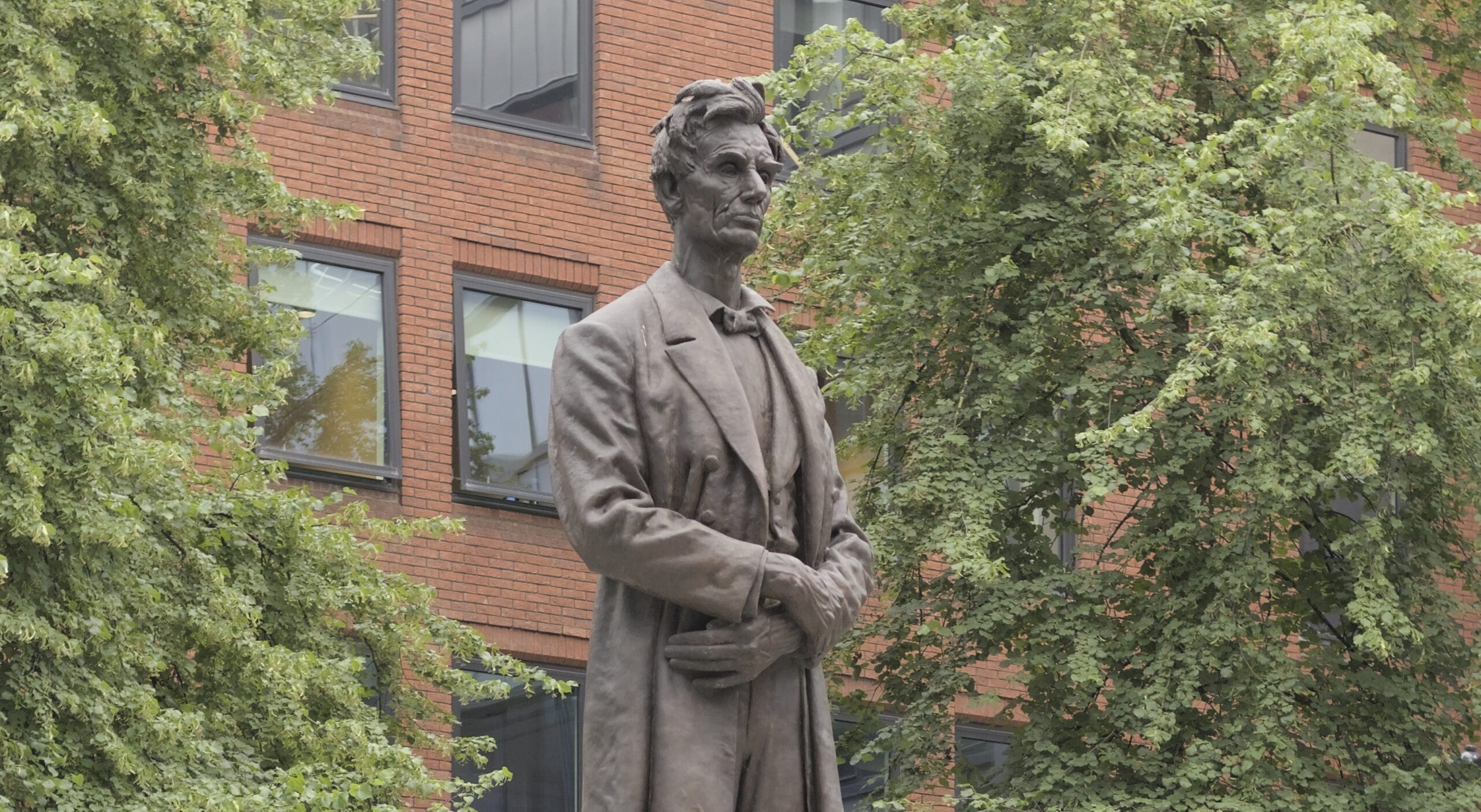
We often hear about Abraham Lincoln and his role in the fight against slavery in the United States, but did you know that Lincoln had a special message of thanks for the people of Manchester?
Just off Albert Square, you’ll find Lincoln Square, home to a statue of Abraham Lincoln. Beneath the statue is a copy of a letter Lincoln sent to the working people of Manchester in 1863, thanking them for their support during the American Civil War.
At the time, Lancashire’s cotton industry was heavily dependent on cotton produced by enslaved people in the American South. When the Union blockade disrupted the supply of cotton, many Lancashire mills were forced to close or reduce production.
This had a devastating impact on local communities. Workers lost their jobs, families struggled to put food on the table, and poverty increased.
You might therefore expect people to demand that the blockade end so that the cotton mills could reopen, but something else happened.
At a huge meeting at Manchester’s Free Trade Hall in 1862, working people expressed their support for the blockade and opposition to slavery despite the hardship it was causing them personally. They were effectively saying that their own suffering should not be relieved by supporting a system built on the enslavement of others.
Lincoln was deeply moved by this act of solidarity. In his letter to the working people of Manchester, he described their stance as: “Sublime Christian heroism which has not been surpassed in any age or in any country.”
But Manchester’s story starts much earlier…
Manchester’s involvement in the fight against the slave trade actually goes back to the 18th century.
On 28th October 1787, abolitionist Thomas Clarkson spoke to a packed audience at what is now Manchester Cathedral, helping to mobilise opposition to the transatlantic slave trade. A Manchester petition was also launched following the meeting. So, more than 75 years before Lincoln’s letter, people in Manchester were already organising and speaking out against the slave trade.
Why does this matter today?
For me, this story is a great example of “Honouring Our Communities”. It reminds us that communities can make a difference when people stand together for what they believe is right even when doing so comes with a personal cost. It also reminds us that Manchester’s history is deeply connected to the history of slavery, abolition and the wider fight for human rights.
So, the next time you’re in Manchester, keep an eye out for Lincoln Square – there’s a fascinating piece of history right there in the city centre.
Find out how your church can mark Black History Month by exploring the resources, reflections and events available on our website: Black History Month 2026.