COMMUNICATIONS
Share Your Story
Every Story Matters
Storytelling is at the heart of our Christian faith.
It begins with the gospel: the great story of God’s creating, redeeming and renewing love, revealed in Jesus Christ. The stories we share from our churches, schools, chaplaincies and communities are part of that continuing story, bearing witness to the ways God is at work among us.
Our diocesan vision is to be a worshipping, growing and transforming Christian presence at the heart of every community.
Sharing our stories matters. Our stories help others see the good news of Jesus lived out in local communities and show how God is changing lives in Greater Manchester and Rossendale.
They also encourage us as a diocesan family, building hope, celebrating signs of growth, and reminding us that we are part of something bigger than ourselves. As we share stories, we inspire one another as we work towards our four key themes of Parish Renewal, Growing Younger, Church Planting and Revitalisation, and Developing Missional Leaders.
The information on this page is also available as a downloadable handout for use in churches, parishes and community settings.
How to Submit Your Story
We want to hear your stories and make sharing them as easy as possible. Choose whichever route works best for you:
Option A: Email Us
Send an outline to comms@manchester.anglican.org
Include:
- 100-200 words (bullet points are fine)
- Any photos/video
- A quote
- Confirmation of consent
Option B: Send a WhatsApp Message
If you spot a great story, simply snap a photo or record a short video and send it via WhatsApp to Gemma Gardiner, Communications Manager, on 07836 224 444.
You do not need to write a polished article. A few notes, a quick message or a voice note is enough. We can work with you to turn it into a story.
Option C: Fill Out Our Share Your Story Form
Fill out our “Share Your Story” form:
Story Checklist
A clear, impactful story usually contains:
- Who it’s about: A name or their context or role
- What happened: The specific moment or initiative
- Why it matters: The impact on the people, church or community
- A quote: One authentic, direct sentence from someone involved
- Visuals: A high-resolution photo or short video clip
- A next step/call to action: What someone reading this can do next (visit, pray, get in touch, take part)
Informed Consent
When we share stories, we are honouring real people. Informed consent means the individual fully understands what is being shared and agrees to it freely.
Before submitting, ensure the person knows:
- Exactly what is being shared (their words, name, photo, or video)
- Where it will appear (website, social platforms, email, print)
- That they can decline or withdraw consent at any point.
How We Use Your Stories
We may share your story:
- Across our website
- On social media
- In our newsletters
- At conferences, training, or events
- In press releases
- In meetings
- In printed materials or resources
- With the wider Church of England
For more information, please contact the Communications Team:
Story Examples
Great stories are simple, everyday moments showing faith, hope and community in action. Here are a few examples, but we are interested in hearing all kinds of stories from your parish, chaplaincy or school!
Supporting Your Local Community
School uniform swaps, community cafés, food projects, or free events tackling homelessness and social isolation.
Caring for the Environment
Eco Church awards, wildlife-friendly spaces, Net Zero initiatives, or churchyard and community litter-picks.
Living Out Your Faith
New Bible study groups, prayer walks, creative worship, or personal stories of how faith has transformed someone’s life.
Engaging with Families & Schools
Toddler groups, holiday activities, youth provision, or building relationships with local schools.
Recent stories
The collection of stories below serves as a great example of the type of story you may wish to tell about your parish. Whether it’s an event, milestone, journey, or achievement, whatever your story, we’d love to hear more.
Giving People Permission to Lead: How Listening Is Helping Churches Grow
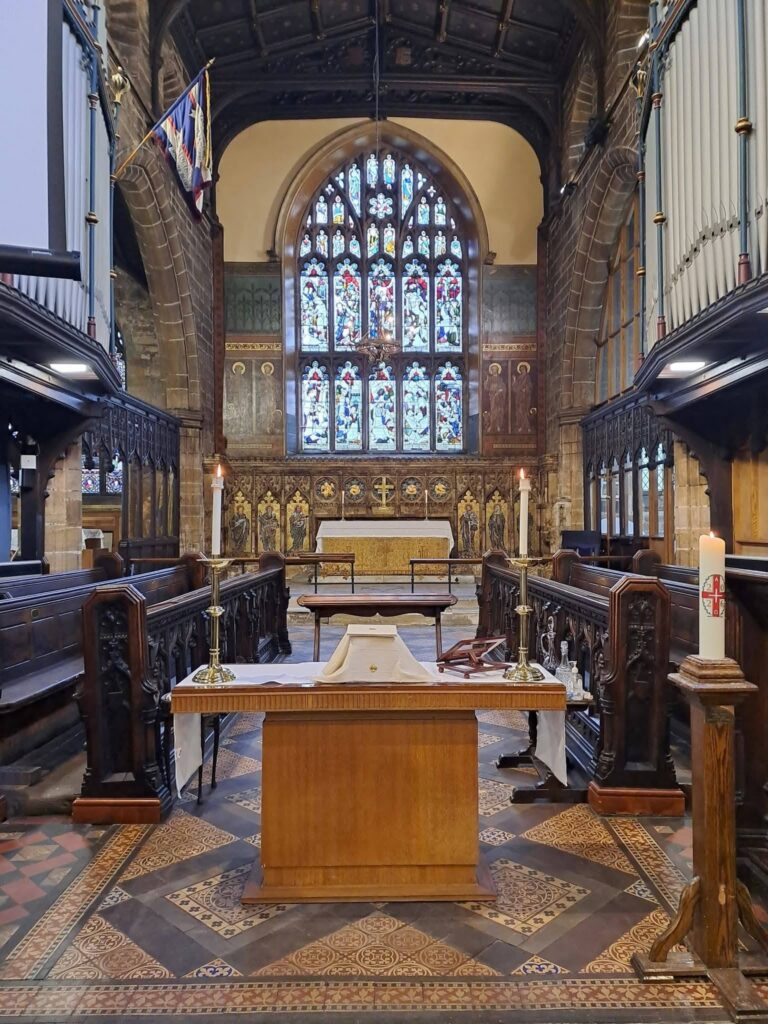
Eccles Parish Church Opens Its Doors as Archaeological Dig Reveals Hidden History
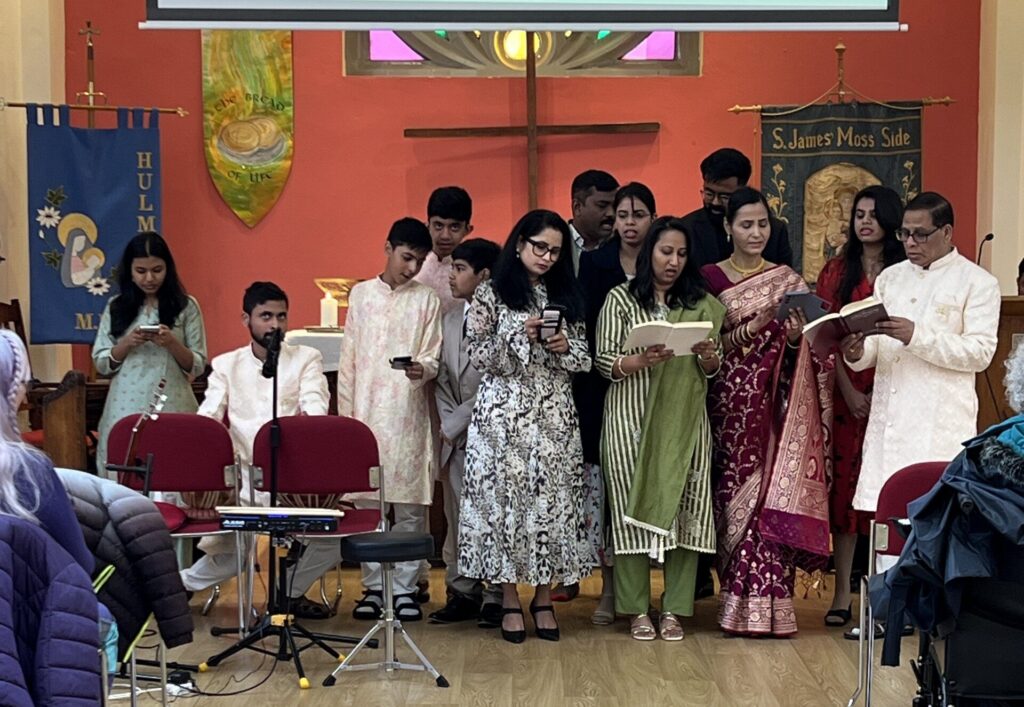
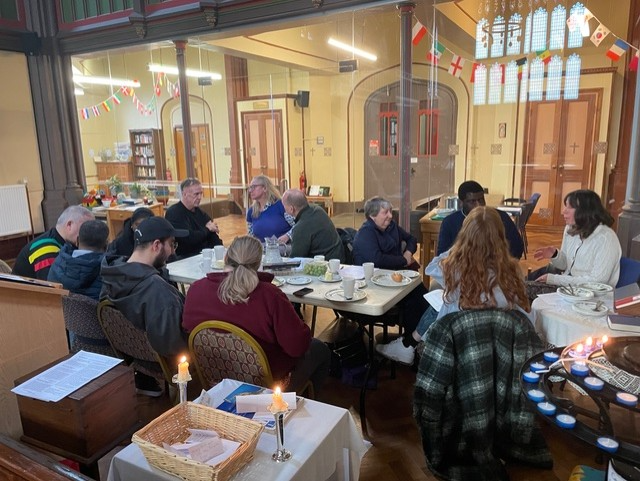
An Intercultural Celebration of Easter Sunday at St James, Moss Side
Share your story FAQs
What is a Story?
A story is a real, specific moment showing Jesus at work in your parish, church plant, school, or chaplaincy. It might happen through worship, pastoral care, social action, discipleship, community partnerships, or everyday hospitality.
A story is:
- Human: Centred on a person, church community, or local group (with consent)
- Specific: Focused on one moment, one initiative, or one clear turning point
- Transformative: Demonstrates impact, growth, learning, or restored hope
- Grounded: Tied directly to Jesus and your local community context
- Clear & accessible: Written in warm, plain English without church jargon
- Actionable: Includes a simple next step or invitation
Story Checklist
A clear, impactful story usually contains:
Who it’s about: A name (if consented) or their context/role
What happened: The specific moment or initiative
Why it matters: The impact on the people, church or community
A quote: One authentic, direct sentence from someone involved
Visuals: A high-resolution photo or short video clip
A next step/call to action: What someone reading this can do next (visit, pray, get in touch, take part)
Narrative Prompts (Need → Action → Impact)
Strong stories follow a clear, practical arc:
| The Need (The Context) | The Action (The Step Taken) | The Impact (The Transformation) |
| What was the challenge or need? | What did you try or change? | How did it make a difference? |
| “Before, our community was facing…” | “So, our parish decided to…” | “Now, we are seeing…” |
| “We noticed that people were…” | “We partnered with / trained…” | “Someone recently told us…” |
| “The challenge in our area was…” | “We started a simple…” | “It has completely reshaped how we…” |
How We Handle Your Stories
Anyone sharing their experience has full ownership throughout the process:
- Review: We confirm quotes and details before publishing.
- Control: If someone changes their mind, we respect that immediately and will pull content from our diocesan-managed channels upon request.
- Channels: Stories may be used across our diocesan website, social media, newsletters, presentations, governance, events, training resources, or wider Church of England national channels.
Informed Consent & Safeguarding
When we share stories, we are honouring real people. Informed consent means the individual fully understands what is being shared and agrees to it freely.
Before submitting, ensure the person knows:
- Exactly what is being shared (their words, name, photo, or video)
- Where it will appear (website, social platforms, email, print)
- That online content can be viewed widely
- That they can decline or withdraw consent at any point.
Extra Care & Safeguarding:
- Children and Young People: Always require signed parental/carer consent conforming to diocesan safeguarding policies. Avoid identifying features such as school uniforms/crests, full names, or location tags without explicit clearance.
- Vulnerable Adults: Extra sensitivity is vital when discussing addiction, debt, mental health, domestic abuse, asylum status, or personal trauma. We can tell powerful stories of transformation without disclosing identifiable details.
Reflecting Our Whole Diocese
Our diocese is home to people of a wide range of traditions, cultural heritages and contexts. We are committed to ensuring our storytelling reflects that breadth:
- Urban estates, inner-city parishes, suburban communities, and rural villages
- Diverse ethnicities, cultures, and global majority heritage voices
- Ministry with children, young people, students, families, and older generations
- Different theological traditions across the breadth of our diocese
- Diverse socio-economic contexts and accessibility needs
Tips for Recording Video on a Phone
You do not need expensive production gear; authenticity matters far more than polish:
- Lighting: Face a natural light source (like a window). Never stand with a bright window directly behind you.
- Framing: Keep the camera at eye level. Frame head and shoulders with a small amount of headroom.
- Orientation: Shoot in landscape (horizontal) for websites and YouTube, or portrait (vertical) if specifically creating for Instagram Reels or TikTok.
- Sound: Find a quiet room away from road noise, echo, or background chatter. Speak clearly and project your voice.
- Pacing: Leave 2 seconds of silence after pressing record before speaking, and 2 seconds at the end before stopping. This makes it easier to edit.
Send the video to us on WhatsApp on 078366 224444 or email us at comms@manchester.anglican.org
Explore more